Game Over Was Never the End: How Video Games Are Helping American Veterans Respawn
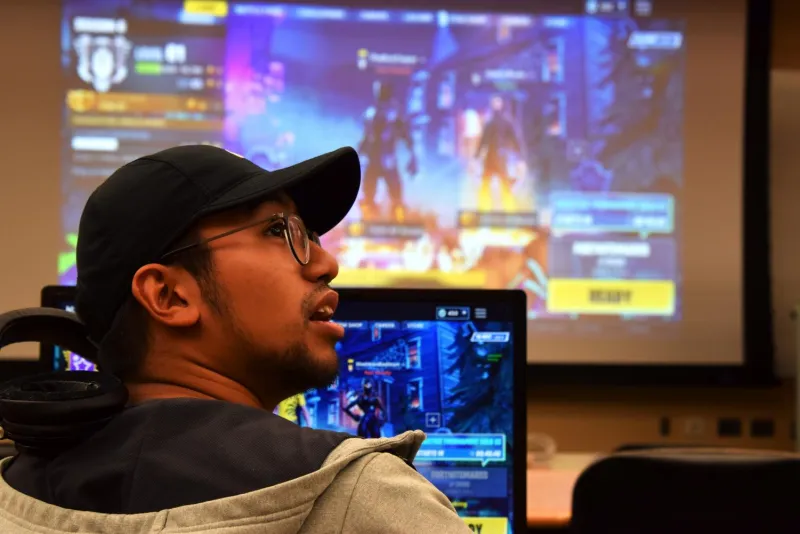
Photo: veteran gaming community controller, via dailyevergreen.com
Marcus Webb doesn't talk about his deployment in the terms you'd expect. He doesn't describe it in the clipped, stoic shorthand that military culture often demands, and he doesn't reach for the kind of trauma narrative that makes civilians comfortable. What he talks about, when he talks about the years after he came home from his second tour, is isolation.
 Photo: Marcus Webb, via alchetron.com
"The hardest part wasn't the nights," he says. "It was the days. You're just sitting there and there's nothing — no mission, no structure, no guys around you. You're just a person in a house and that doesn't make any sense to you anymore."
Webbb, a former Army infantryman who served two tours in Afghanistan and was medically separated in 2021 after a TBI sustained in a vehicle accident, found his way back to structure through an unexpected door. A care package from Stack Up — a nonprofit that ships games and gaming equipment to active-duty service members and veterans — included a gaming headset and a copy of Deep Rock Galactic. Within two weeks, he was playing nightly with a group of veterans he'd met through the organization's online community. Within two months, he was sleeping better, leaving the house more, and had reconnected with a former unit member he hadn't spoken to in three years.
"It sounds ridiculous when you say it out loud," he admits. "But it was the first time since I got home that I felt like part of a team again."
The Science of Why It Works
It doesn't sound ridiculous to Dr. Elspeth Cameron Ritchie, a retired Army psychiatrist and one of the country's foremost experts on military mental health. She has been watching the therapeutic potential of gaming gain credibility in clinical circles for years — and says the mechanisms behind its effectiveness are well-grounded in neuroscience.
 Photo: Dr. Elspeth Cameron Ritchie, via www.kennedy-center.org
"Games provide a structured environment with clear goals, immediate feedback, and a sense of agency," she explains. "For veterans with PTSD, one of the core disruptions is the loss of that structure — the sense that actions have predictable consequences. A game environment restores that in a very direct way."
The neurological case goes deeper. Research published in peer-reviewed journals including JMIR Serious Games has documented reductions in PTSD symptom severity in veterans who engaged in regular gaming — particularly cooperative multiplayer games, which activate social bonding pathways that trauma and isolation tend to suppress. For veterans with TBI, certain types of games have shown promise in cognitive rehabilitation, improving attention, working memory, and processing speed in ways that translate to daily function.
For veterans with physical disabilities — limb loss, spinal cord injury, chronic pain — adaptive gaming technology has opened access to an activity that provides both cognitive engagement and the critical social connection that physical mobility limitations can sever. Organizations like AbleGamers, which provides customized adaptive controller setups to people with disabilities at no cost, have served tens of thousands of veterans and civilians since their founding, and their work sits at the intersection of accessibility advocacy and mental health support.
"We talk about gaming as entertainment," says Steve Spohn, Chief Operating Officer of AbleGamers. "But for a lot of the veterans we work with, it's the primary way they socialize. It's how they stay connected to the world. Calling that escapism fundamentally misunderstands what's happening."
Stack Up and the Peer-Support Model
Founded in 2015 by Army veteran Stephen Machuga, Stack Up has grown from a grassroots effort to ship care packages into a multifaceted organization with programs specifically targeting veteran mental health. Its StACK Up Overwatch (SUDO) program trains volunteer peer supporters — predominantly veterans themselves — to provide real-time emotional support within gaming communities, operating in the spaces where veterans already spend their time rather than requiring them to seek out formal clinical settings.
 Photo: Stephen Machuga, via invisibledisabilities.org
The peer-support model is significant. One of the most persistent barriers to mental health care among veterans is the stigma attached to seeking help through official channels — a stigma that is particularly acute in communities that valorize self-reliance and toughness. Gaming communities, paradoxically, have become spaces where that stigma is lower. The shared language of the game creates common ground; the anonymity of an online handle reduces vulnerability; the activity itself provides a reason to be present that doesn't require admitting you need support.
"Nobody logs in and says 'I'm here because I'm struggling,'" notes one Stack Up volunteer coordinator who asked not to be named. "They log in because they want to play. And then they're in a community where people check on each other, where someone notices if you haven't been on in a while. That's the intervention. It just doesn't look like one."
Reframing the Stigma
The mainstream cultural narrative around gaming and mental health has historically run in the opposite direction — framing excessive gaming as a symptom of withdrawal, avoidance, or addiction rather than a potential tool for recovery. That framing has real consequences for veterans, whose gaming habits are sometimes flagged by family members, VA counselors, or civilian employers as a concern rather than a coping strategy.
The evidence increasingly pushes back against that default assumption. Context matters enormously. Solitary, compulsive gaming driven by avoidance looks different from cooperative social gaming that builds connection and routine. The question researchers and clinicians are now asking is not "is gaming good or bad" but "what kind of gaming, for whom, in what context, and with what social scaffolding."
For Marcus Webb, the answer to that question has been unambiguous. He now volunteers with Stack Up himself, helping onboard newly separated veterans into the organization's gaming communities. He still plays Deep Rock Galactic — "the bugs don't care about your trauma," he says with a grin — but he's also working with a VA therapist, has reconnected with his family in ways that felt impossible two years ago, and recently started a part-time job.
"People hear that video games helped me and they want to roll their eyes," he says. "But it wasn't the games. It was the people inside the games. The games were just the door."
The Road Ahead
The therapeutic use of gaming in veteran care is still in early stages institutionally. The VA has been slow to formally integrate gaming-based interventions into its clinical programming, though individual VA facilities have run pilot programs with promising results. Nonprofit organizations like Stack Up and AbleGamers are doing the bulk of the heavy lifting, largely on donation-driven budgets that don't reflect the scale of the need.
Advocates are pushing for more formal research funding, greater clinical recognition, and — critically — a cultural shift in how gaming is discussed in the context of veteran wellness. The goal isn't to replace evidence-based clinical care. It's to recognize that for many veterans, the path to that care runs through a headset, a controller, and a group of people who understand without needing to be told.
The respawn, it turns out, isn't just a game mechanic. For thousands of American veterans, it's something that looks a lot like a second chance.