The Speedrun Revolution: How a Niche Subculture Became Gaming's Most Watched Competitive Sport
The Speedrun Revolution: How a Niche Subculture Became Gaming's Most Watched Competitive Sport
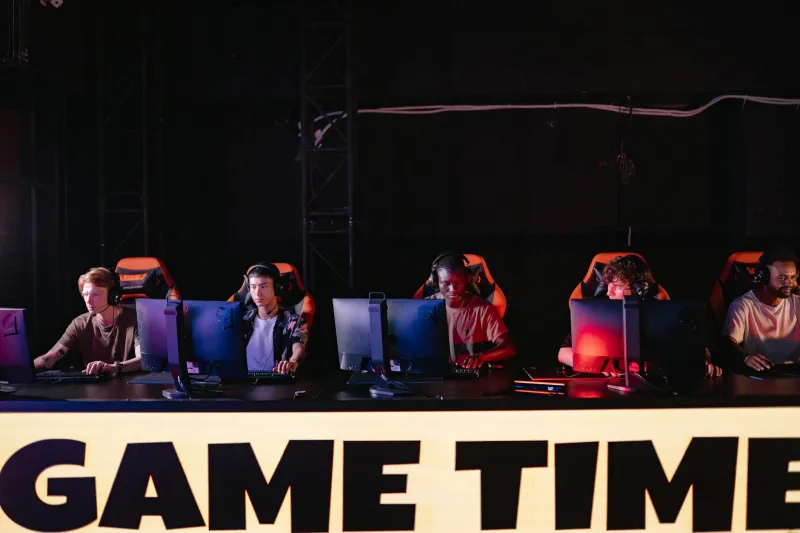
When Games Done Quick 2025 pulled in 2.8 million concurrent viewers during its Super Metroid finale, it wasn't just another charity marathon hitting its donation goals. It was proof that speedrunning—the art of completing games as fast as humanly possible—had officially graduated from internet curiosity to mainstream entertainment juggernaut.
 Photo: Games Done Quick 2025, via www.madalingames.com
From Basement to Broadcast
Speedrunning's journey to legitimacy reads like a classic American underdog story. What started as a handful of obsessive gamers recording VHS tapes of their fastest completion times in the late '90s has evolved into a multi-million-dollar ecosystem that rivals traditional esports in viewership and community engagement.
The transformation accelerated during the pandemic years of 2020-2022, when isolated gamers gravitated toward speedrunning's unique blend of technical mastery and community celebration. Unlike traditional competitive gaming, speedrunning offered something distinctly collaborative—runners sharing strategies, celebrating each other's breakthroughs, and building communities around the shared obsession of optimization.
"We went from maybe 50,000 people knowing what a frame-perfect trick was to having millions of viewers cheering for someone to save 0.3 seconds in a 30-year-old game," explains Sarah Chen, community manager for the largest speedrunning database. "That's not normal, and that's what makes it beautiful."
 Photo: Sarah Chen, via excellent-moto.ru
The Psychology of Perfect Runs
What drives someone to play the same game thousands of times, shaving milliseconds off their personal best? Sports psychologists studying the speedrunning phenomenon point to a unique cocktail of perfectionism, community belonging, and the pure dopamine hit of measurable improvement.
Dr. Marcus Rodriguez, who studies gaming motivation at UCLA, describes speedrunning as "meditation through repetition." Unlike other competitive gaming formats that rely on defeating opponents, speedrunning pits players against themselves and the game's fundamental systems. Every run is a conversation between human creativity and programmed limitations.
 Photo: Dr. Marcus Rodriguez, via i.pinimg.com
The mental health benefits are real. Many speedrunners describe their practice as therapeutic—a controlled environment where improvement is always possible and community support is unconditional. But the same obsessive qualities that make great speedrunners can tip into unhealthy territory when personal bests plateau or community drama erupts.
Corporate Courtship and Cultural Concerns
As speedrunning's popularity exploded, corporate America took notice. Twitch launched dedicated speedrunning categories, YouTube's algorithm began favoring optimization content, and major publishers started acknowledging speedrunners in official communications—a far cry from the early days when completing games "wrong" was seen as disrespectful to developers.
The influx of sponsor money and platform support has been transformative. Top speedrunners now earn six-figure incomes through streaming, sponsorships, and appearance fees. Events like Awesome Games Done Quick have raised over $40 million for charity, proving that niche gaming communities can drive real-world impact.
But success brings scrutiny. Some veteran community members worry that corporate interest threatens speedrunning's anarchic spirit. When a major energy drink company sponsors a runner to attempt a world record live on stream, are we watching authentic competition or manufactured content?
The Technical Arms Race
Modern speedrunning bears little resemblance to the simple "beat the game fast" premise of its origins. Today's top runners are part athlete, part computer scientist, part performance artist. They exploit programming quirks that developers never intended, sequence-break through games in ways that would horrify their creators, and execute inputs with precision that pushes human reflexes to their absolute limits.
The community's relationship with glitches and exploits remains fascinatingly complex. Unlike traditional esports, where bugs are patched out, speedrunning celebrates them as features. The most popular categories often revolve around game-breaking tricks that reveal the beautiful chaos lurking beneath polished surfaces.
This technical depth has spawned its own economy. Frame data analysis, input display software, and specialized hardware modifications have created a cottage industry serving speedrunners' optimization obsessions. When a new routing discovery can save three seconds in a popular category, the ripple effects can shift thousands of hours of previous strategies overnight.
Building Tomorrow's Scene
As speedrunning continues its mainstream ascent, the community faces growing pains familiar to any subculture hitting the big time. How do you preserve authenticity while welcoming newcomers? Can grassroots organizing coexist with corporate sponsorship?
The answers are already emerging from within the community itself. Regional speedrunning events are proliferating across America, from small-town arcade gatherings to major convention showcases. Educational content creators are demystifying advanced techniques for curious newcomers. Accessibility advocates are ensuring that speedrunning's growth doesn't leave behind disabled players who helped shape the scene.
Most importantly, speedrunning's core values—community over competition, improvement over perfection, and celebration of human creativity within digital constraints—remain intact even as the spotlight intensifies.
Speedrunning succeeded by being everything traditional competitive gaming wasn't: welcoming instead of exclusive, collaborative instead of cutthroat, and focused on personal growth instead of zero-sum victories. As it enters its next evolutionary phase, that countercultural DNA might just be its greatest competitive advantage.