The Couch Is Back: How Local Multiplayer Went From Dead Format to Gaming's Hottest Comeback Story
The Death That Wasn't
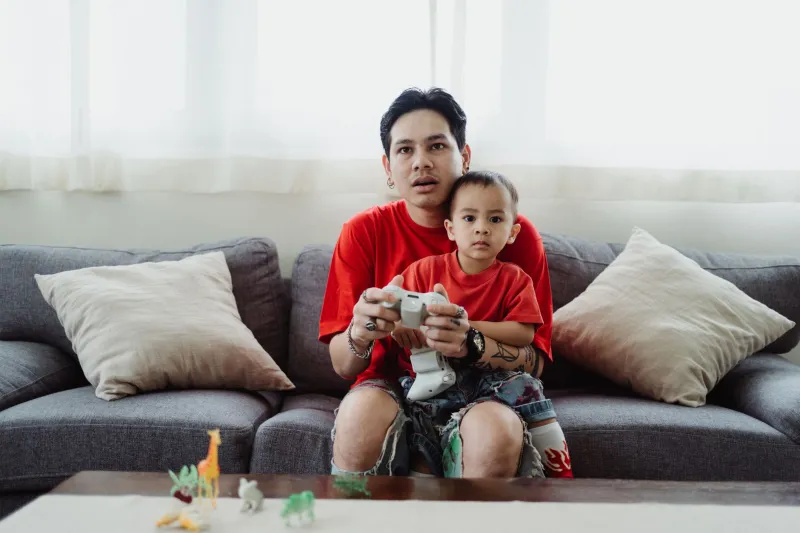
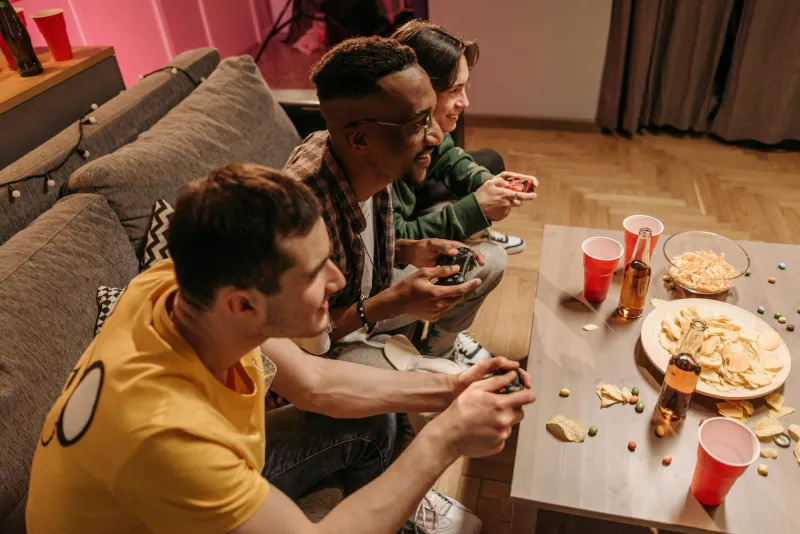
Somewhere between the Xbox 360's online revolution and the PlayStation 4's share button, the gaming industry quietly killed off one of its most beloved traditions. Local multiplayer — that magical experience of crowding around a single screen with friends, controllers tangled and snacks scattered — became an endangered species, dismissed as outdated technology from a bygone era.
Except nobody told the players.
In 2026, local multiplayer isn't just surviving; it's thriving in ways that would have seemed impossible during the height of the online-only era. Sales data from Steam and console marketplaces show couch co-op games growing at nearly double the rate of online multiplayer titles, while streaming platforms report that local multiplayer content generates significantly higher engagement than solo gameplay footage.
The couch, it turns out, never really went anywhere. It was just waiting for the industry to remember why people fell in love with gaming in the first place.
The Online Obsession Era
To understand the comeback, you need to understand the departure. Throughout the 2010s, major publishers systematically abandoned local multiplayer features that had been standard since the arcade era. The reasons seemed logical at the time: online play offered infinite replayability, enabled larger player counts, and — crucially for business models — kept players engaged with live services and DLC purchases.
Halo 5: Guardians shipped without split-screen campaign support, breaking a 14-year tradition. Call of Duty: Black Ops 4 launched without any local multiplayer modes. Even family-friendly franchises like FIFA began prioritizing Ultimate Team's online ecosystem over living room tournaments.
"We were chasing metrics that made sense on spreadsheets but ignored what made gaming special," admits former Activision designer Marcus Webb, who worked on several mid-2010s titles that dropped local features. "Player engagement time, monthly active users, monetization per session — none of those captured the joy of beating your little brother at Mario Kart."
The industry's focus shifted toward solitary experiences punctuated by anonymous online interactions, optimized for individual engagement rather than shared moments.
The Pandemic Pivot
Ironically, it took a global lockdown to remind developers and players alike what they'd lost. As millions found themselves stuck at home with family members and roommates, the limitations of online-only gaming became painfully apparent. You couldn't exactly invite friends over for a Fortnite session, but you could rediscover the simple pleasure of passing a controller back and forth.
Nintendo, which had never fully abandoned local multiplayer, suddenly looked prescient rather than outdated. Animal Crossing: New Horizons became a cultural phenomenon partly because multiple family members could share an island experience. Among Us exploded not just as an online game, but as something groups could play together in the same room, talking and laughing without headsets.
"The pandemic forced us to confront how isolated modern gaming had become," explains Dr. Rachel Kim, who studies social gaming patterns at NYU. "People realized they missed the physical presence, the shared reactions, the ability to read body language and share snacks. You can't replicate that through Discord."
The It Takes Two Effect
No single game better exemplifies the local multiplayer renaissance than Hazelight Studios' It Takes Two. Released in March 2021, this cooperative adventure required two players — either locally or online — to progress through its relationship-focused narrative. While reviewers praised its innovative mechanics and storytelling, players discovered something more fundamental: local co-op could deliver experiences that online play simply couldn't match.
 Photo: Hazelight Studios, via www.ntower.de
"Playing It Takes Two with my partner on the couch was completely different from our online gaming sessions," says Jennifer Martinez, a 28-year-old marketing coordinator from Austin. "We were problem-solving together in real-time, celebrating victories together, getting frustrated together. It felt like we were collaborating on something meaningful, not just grinding through content."
The game's success — over 10 million copies sold and numerous Game of the Year awards — sent shockwaves through an industry that had written off local multiplayer as commercially unviable. Suddenly, publishers were scrambling to understand why a niche cooperative game had outperformed major online shooters and battle royales.
The Design Renaissance
Modern local multiplayer games benefit from decades of design evolution that the online-obsessed era temporarily ignored. Developers have rediscovered and refined techniques that make shared-screen gaming more accessible and enjoyable than ever before.
Dynamic split-screen technology allows games like Unravel Two to seamlessly transition between single-screen cooperation and split-screen exploration, optimizing the view based on player proximity and game state.
Asymmetric gameplay design creates experiences where players have fundamentally different roles and abilities, as seen in games like Overcooked or Portal 2's cooperative campaign. This approach eliminates the traditional split-screen problem of identical experiences competing for screen real estate.
Smart camera systems in games like Rayman Legends and New Super Mario Bros. U Deluxe use AI to frame action optimally for all players simultaneously, reducing the chaos and confusion that plagued earlier local multiplayer attempts.
"We've solved most of the technical problems that made local multiplayer frustrating in the past," explains Sarah Chen, lead designer at Team17. "The challenge now is convincing publishers that there's still an audience for these experiences."
The Streaming Factor
Platforms like Twitch and YouTube have inadvertently become powerful advocates for local multiplayer gaming. Content creators consistently report that couch co-op streams generate higher viewer engagement, longer watch times, and more positive comments than solo gameplay sessions.
"There's something inherently entertaining about watching friends react to each other in real-time," says Marcus Johnson, whose YouTube channel focuses exclusively on local multiplayer content. "The banter, the competition, the genuine surprise when someone pulls off an impossible move — that's content gold that you can't script or manufacture."
This streaming success has created a feedback loop where developers see local multiplayer games gaining organic promotion through content creators, leading to increased investment in the format.
The Business Case
Contrary to industry assumptions, local multiplayer games can be highly profitable when designed thoughtfully. They often require fewer server infrastructure costs, have lower ongoing maintenance requirements, and can achieve viral marketing through social sharing and word-of-mouth recommendations.
Moving Out, a cooperative moving simulation game, achieved over 1 million sales with a relatively modest development budget by focusing exclusively on local multiplayer experiences. Similarly, Cuphead's challenging local co-op mode contributed significantly to its 6 million+ sales figure.
"The key is understanding that local multiplayer games sell differently," explains indie publisher Devolver Digital's marketing director. "They spread through friend groups and family recommendations rather than traditional advertising. One sale can influence five or six additional purchases as people want to play with their social circles."
The Social Connection
Beyond nostalgia and design innovation, the local multiplayer resurgence reflects broader cultural shifts toward authentic social connection. In an era of social media superficiality and digital burnout, physically gathering to play games offers something increasingly rare: unmediated shared experiences.
"My friend group has a weekly game night now, and it's become the highlight of everyone's week," says David Park, a software engineer from Seattle. "We put away our phones, order pizza, and just focus on having fun together. It's incredibly grounding in a way that our online gaming sessions never were."
This desire for authentic social interaction has driven sales of party games like Jackbox Games' offerings, which cleverly use smartphones as controllers while maintaining the shared-screen experience that brings people together.
Looking Ahead
The local multiplayer renaissance shows no signs of slowing. Major publishers are quietly adding couch co-op features to upcoming releases, while indie developers are building entire studios around local multiplayer concepts. Even traditionally online-focused franchises are exploring ways to incorporate meaningful local play options.
Nintendo's continued success with local multiplayer experiences, from Super Mario Odyssey's assist mode to Mario Kart 8 Deluxe's accessibility options, has provided a roadmap for making these experiences inclusive and approachable for players of all skill levels.
"We're seeing a fundamental shift in how people think about gaming as a social activity," observes industry analyst Michael Pachter. "The pendulum swung too far toward isolated online experiences, and now it's swinging back toward balance. The most successful games going forward will offer both meaningful online connectivity and compelling local multiplayer options."
The couch never really went away — it just needed the gaming industry to remember that sometimes, the best gaming experiences happen when you can high-five your teammate without using an emote.