The $20 Alternative: How Budget Gaming 'Dupes' Are Quietly Winning the Price War Against AAA
Photo: Remigiusz Michalski, CC0, via Wikimedia Commons
The term 'dupe' started in beauty and fashion — a cheaper product that delivers most of the experience of a luxury original without the luxury price tag. It migrated into food, into home goods, and now, with a kind of inevitable logic, it's found a home in gaming. Because if there's one industry that's handed budget-conscious consumers a reason to go looking for alternatives, it's the one currently charging $80 for a base game and another $30 for the season pass.
Across Steam, the Xbox and PlayStation storefronts, and especially on mobile and Nintendo Switch, a growing ecosystem of games has quietly positioned itself as the smart shopper's answer to AAA fatigue. These aren't knockoffs in any legally actionable sense. They're games that look at what the blockbusters are doing, identify the core mechanical appeal, and deliver something functionally similar for a fraction of the price. The gaming community — borrowing from the influencer economy — has started calling them dupes. And they're selling.
What a Gaming Dupe Actually Looks Like
Let's be specific, because this conversation gets muddier without examples.
When Palworld launched in early access in January 2024 and became one of the fastest-selling games in Steam history, the discourse immediately reached for the P-word. Here was a game that looked, at a glance, like someone had asked an AI to generate a Pokémon game with survival mechanics and guns. The developers, Pocketpair, pushed back on the characterization — and they had a point. Palworld is genuinely its own thing, with design decisions that diverge significantly from the franchise it superficially resembles. But the marketing reality was that 'Pokémon with guns' drove fifteen million sales in the first three days. The surface similarity was the pitch.
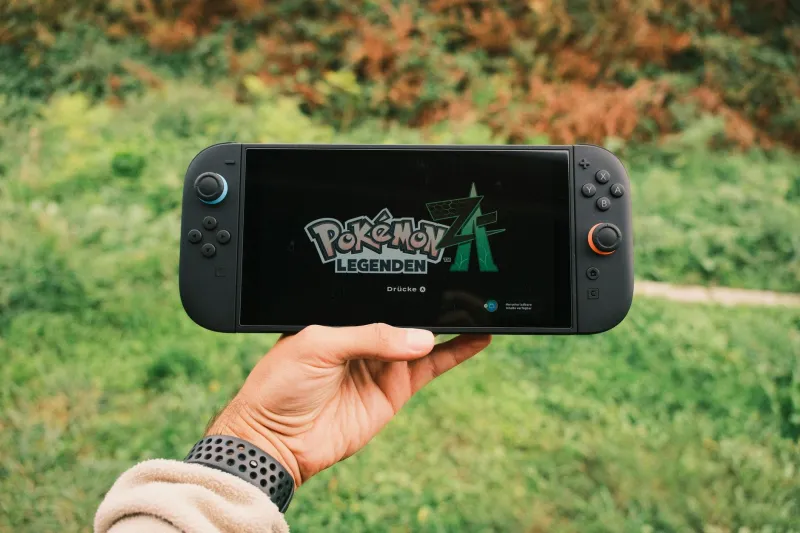
 Photo: Pokémon, via www.creativefabrica.com
More recently, games like Enshrouded, a fantasy survival title that draws heavily from the visual and mechanical language of Valheim and Minecraft, and titles like Mecha Break positioning themselves in the space carved out by Armored Core, demonstrate how fluidly the dupe logic operates across genres. None of these games are illegal. Several are genuinely excellent. But they're all, to varying degrees, banking on the consumer recognition of a bigger, more expensive game.
At the more explicitly budget end of the market, mobile and Switch storefronts are saturated with titles that are functionally Stardew Valley, functionally Hades, or functionally Diablo — priced at $4.99 to $14.99 and reviewed with a mixture of appreciation and mild exasperation by players who know exactly what they're getting.
The Developers' Perspective
Here's where the conversation gets genuinely interesting, because the people making these games are not, by and large, cynical operators. Many are small studios operating on tight margins, staffed by developers who grew up loving the same franchises they're now drawing from.
The line between inspiration and imitation has always been fuzzy in creative industries. Music samples, film homages, literary genre conventions — every creative field has a version of this negotiation. Gaming is no different, except that the visual and mechanical similarities can sometimes be startling in their specificity.
What's changed in 2025 and 2026 is the economic context. When AAA games cost $80 at launch, the value proposition of a $15 alternative that delivers 70% of the experience becomes genuinely compelling. Developers at smaller studios are acutely aware of this. They're not just making games that look like bigger ones — they're making a deliberate argument about pricing, about what a game needs to be to justify its cost, and about who gets left out when the baseline price keeps climbing.
The American Gamer's Calculus
Consumer spending data from 2025 tells a consistent story: American households are making tougher choices about discretionary spending, and gaming is not immune. The average US gamer is not a teenager with unlimited time and a parent's credit card. They're an adult with a mortgage or rent, possibly kids, a job that limits play time, and a backlog that already stretches years into the future.
For that person, the calculus around an $80 game is not trivial. Eight dollars used to be a movie ticket. Eighty dollars is a significant grocery run. And if a $20 game on Game Pass or a $15 indie on Steam is going to scratch the same itch — the survival crafting itch, the action RPG itch, the city builder itch — then the premium product has to make a much stronger case for itself than it used to.
The irony is that some of the most enthusiastically received games of the past two years have been these mid-tier alternatives. Lethal Company, a co-op horror game that cost a few dollars at early access launch, became a cultural phenomenon. Schedule 1, a drug empire simulator that nobody saw coming, dominated Steam charts earlier this year. Neither of these was trying to be Call of Duty. Both of them understood exactly what their audience wanted and delivered it efficiently.
The Creativity Question
There's a less comfortable angle to this story, though, and it's worth sitting with. If the market increasingly rewards games that look like other, more successful games — that trade on consumer familiarity rather than genuine novelty — does that create pressure on developers to play it safe? To reach for the visual shorthand of a proven formula rather than risk something genuinely new?
The gaming industry has always had derivative titles. The 16-bit era was full of platformers that were, essentially, Super Mario Bros. with different sprites. But the current moment feels different in scale and intentionality. When a developer openly markets their game as 'X meets Y' — and when that framing is the most efficient path to a Steam algorithm boost and a viral Twitter thread — the incentive structure is pointing in a specific direction.
The best case scenario is that the dupe economy is a temporary pressure valve: a way for the market to absorb price shock while AAA publishing figures out how to justify its costs. The less optimistic reading is that it's accelerating a homogenization of mainstream gaming, where the safe middle ground crowds out the weird, the original, and the genuinely risky.
The Bottom Line
For the average American gamer navigating a $80 release calendar with a $200 monthly entertainment budget, the dupe economy isn't a philosophical problem — it's a practical solution. These games exist because there's real demand for them, they're often made with genuine care, and many of them are legitimately good.
But the industry as a whole should probably be asking why so many players have decided that 70% of the AAA experience at 20% of the price is a better deal than the real thing. That's not just a creativity problem or an imitation problem. That's a value problem. And until publishers fix it, the dupes are going to keep selling.
The gaming dupe economy isn't going away — and honestly, until AAA publishers start making a better case for their price tags, it probably shouldn't.