Still Paying the GPU Tax: Why PC Gaming Hardware Costs Are Still Crushing Everyday Budgets in 2026
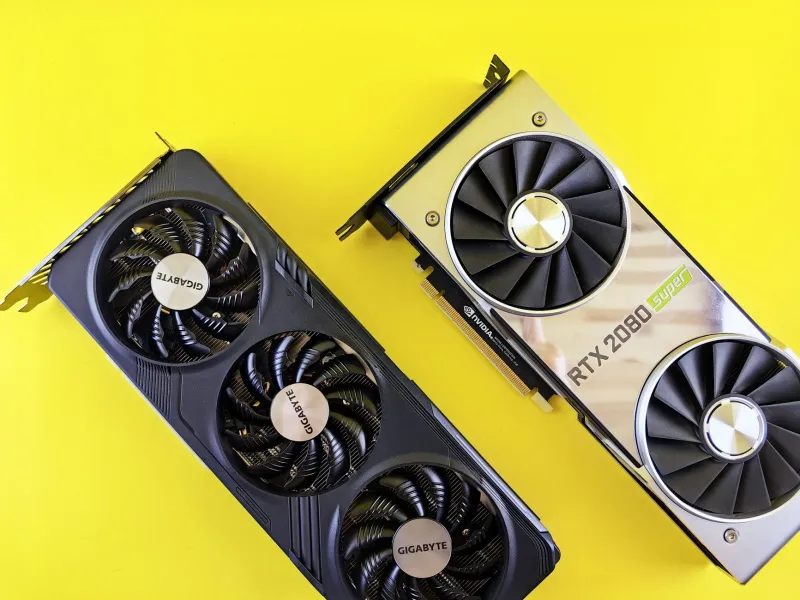
If you built or upgraded a gaming PC in the last eighteen months and felt like you paid more than you should have, you weren't imagining it. The GPU shortage that torched the market during the pandemic years technically ended years ago — supply chains normalized, mining demand cooled, and manufacturers ramped production back up. But the hangover? That's very much still with us. In 2026, the mid-range graphics card market remains one of the most frustrating corners of consumer tech, and everyday American gamers are bearing the brunt of it.
So what's actually going on? The answer involves a messy overlap of AI compute demand, next-gen launch pricing, a retail ecosystem that never fully reset, and a set of upgrade cycles that got permanently warped by years of scarcity. Let's break it down.
The AI Wildcard Nobody Saw Coming
Here's the part that catches a lot of casual PC builders off guard: the same chips that power your gaming rig are increasingly in demand from data centers, AI researchers, and cloud compute providers. NVIDIA's consumer and professional GPU lines share foundational architecture, and when enterprise demand for AI inference and training exploded over the past few years, it didn't just affect the data center — it trickled down into allocation priorities, fab capacity, and ultimately retail pricing.
According to hardware analysts at Jon Peddie Research, AI workload demand has continued to put meaningful pressure on TSMC and Samsung fab capacity well into 2026, meaning that even when a new consumer GPU launches at a given MSRP, the volume available at that price point is often thinner than the spec sheet suggests. Scalpers and gray-market resellers — a problem everyone assumed died with the crypto crash — have quietly crept back in at the high end, particularly around launch windows.
The result: that $399 mid-range card you saw in the announcement trailer? Good luck finding it at that price on launch day.
The Next-Gen Launch Inflation Problem
Both AMD and NVIDIA have pushed new GPU generations into the market in the 2025–2026 window, and while the raw performance numbers are genuinely impressive, the pricing strategy has drawn widespread criticism. Entry points for the new architectures have crept upward — what used to be a $299 "sweet spot" card now often carries a $449 or even $499 sticker. Manufacturers frame this as reflecting higher production costs and improved silicon yields, and there's some truth to that. But it also conveniently shifts the entire pricing ladder upward, making last-gen cards look more expensive in comparison and giving retailers cover to hold prices on older inventory.
For a US gamer on a realistic budget — say, someone trying to keep their entire build under $800 — this is genuinely brutal. The cards that used to hit that mid-range performance tier comfortably now either underperform expectations or require compromising elsewhere: cheaper storage, a weaker CPU, or skipping RAM upgrades entirely.
Who's Actually Feeling This?
The gamers getting squeezed hardest aren't the enthusiasts who budget $1,500 for a GPU and call it a Tuesday. It's the massive, often-overlooked middle of the American gaming market — the college student trying to game on a hand-me-down rig, the parent building their first proper desktop, the console refugee who switched to PC expecting more value for their dollar. According to Steam's own hardware survey data, the majority of active PC gamers are still running cards that are two or more generations behind current flagships. That's not a nostalgia choice — that's a budget reality.
And it's pushing behavior changes. Cloud gaming services like NVIDIA GeForce NOW, Xbox Cloud Gaming, and Amazon Luna have seen meaningful upticks in users who explicitly cite hardware cost as the reason they're streaming instead of running games locally. Console sales, which many analysts expected to plateau, have held steadier than projected in part because a PlayStation 5 or Xbox Series X still represents predictable, fixed-cost gaming in a way that PC building no longer reliably does.
Practical Moves for Budget Builders Right Now
None of this means you're completely out of options. Here's where savvy buyers are actually finding value in 2026:
Go one generation back, deliberately. Last-gen mid-range cards from both AMD and NVIDIA — particularly the cards that launched at $249–$349 two years ago — can still be found at reasonable prices on the used market via eBay, Facebook Marketplace, and r/hardwareswap. Performance is still more than adequate for 1080p and entry-level 1440p gaming at high settings.
Watch for refurb stock. NVIDIA's refurbished store and third-party refurb retailers like Newegg Refurbished have become genuinely solid options, often offering cards with warranty coverage at 20–30% below new pricing.
Don't sleep on AMD's value play. While NVIDIA dominates mindshare, AMD has historically been more aggressive on mid-range pricing, and their current-gen offerings deserve a serious look if you're not locked into DLSS-dependent titles.
Patience is a spec. If your current card is running games at acceptable framerates, skipping a generation entirely and waiting for the next price correction is often the smartest financial move. GPU pricing historically dips 6–9 months post-launch as initial demand cools.
Will It Actually Get Better?
Honestly? The short-term outlook is mixed. AI compute demand isn't going away, and the fab capacity constraints that underpin it are structural, not temporary. What could shift the equation is increased competition — Intel's Arc line has matured faster than most expected, and if they can establish credible mid-range options, it forces AMD and NVIDIA to respond on price. Additionally, if the next wave of cloud gaming infrastructure genuinely closes the latency gap, the pressure on consumer GPU manufacturers to justify premium pricing will increase.
But for now, the GPU tax is real, it's ongoing, and American PC gamers deserve to hear it said plainly: the "affordable gaming PC" narrative the industry loves to sell is running about two years behind market reality. Build smart, buy used when it makes sense, and don't let a spec sheet make you feel like you're falling behind. You're not. You're just playing the long game — which, as it turns out, is exactly what the best PC builders have always done.