No Coach, No Scouts, No Pipeline: Why America's Most Talented Young Gamers Are Going Pro Alone
Photo: Mostafameraji, CC BY-SA 4.0, via Wikimedia Commons
No Coach, No Scouts, No Pipeline: Why America's Most Talented Young Gamers Are Going Pro Alone
Imagine you're fifteen years old and you're genuinely exceptional at basketball. Not 'good for your age' exceptional — actually exceptional. The kind of player who makes coaches stop practice to watch. There is a system waiting for you. There are AAU circuits, high school varsity programs, travel teams, summer leagues, and a network of college scouts whose literal job is to find you. The path is not easy, and it's not fair to everyone on it, but it exists. It has structure. It has people whose job title includes the word 'development.'
 Photo: NBA G League, via www.reviewjournal.com
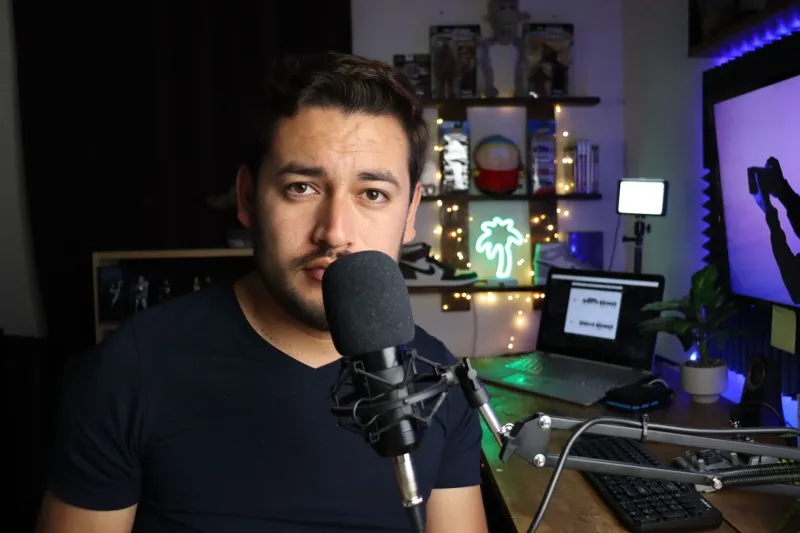
Now imagine you're fifteen years old and you're genuinely exceptional at Valorant.
You are, in all likelihood, on your own.
The Gap That Nobody's Talking About Loudly Enough
American esports has a talent development problem that sits in plain sight and somehow never quite becomes the headline it deserves to be. The professional tier of competitive gaming — the Valorant Champions Tour, the League of Legends Championship Series, the Call of Duty League — is a mature, well-funded industry. Team rosters, coaching staffs, analyst desks, sports psychologists: at the top end, esports organizations operate with a sophistication that would have seemed absurd a decade ago.
 Photo: Valorant Champions Tour, via gamelevate.com
But between the talented teenager grinding ranked queues in their bedroom and the professional roster slot they're theoretically chasing, there is almost nothing. No coherent youth league structure. No standardized coaching certification. No national scouting infrastructure. No developmental league with a clear pathway to the top. The pipeline that every other serious competitive sport takes for granted simply doesn't exist in any meaningful, organized form.
This isn't a new observation. Esports educators and youth program advocates have been making this argument for years. What's changed is the scale of the problem. Esports scholarships at US colleges have proliferated — there are now over 200 colleges and universities offering them — but scholarships without a development pathway beneath them are just financial aid with a controller. You can get a kid to college. That doesn't mean you've built them into a professional.
What Traditional Sports Actually Do
It's worth being specific about what youth development looks like in a sport that's figured it out, because the contrast is instructive.
US Soccer's youth academy system, for all its well-documented flaws and inequity problems, provides a structured environment in which talented young players are identified, coached by licensed professionals, exposed to increasing levels of competition, and evaluated against their peers on a consistent basis. The USSDA and its successor structures exist specifically to bridge the gap between recreational youth play and professional readiness. Coaches in this system have certifications. There are standards. There is accountability.
The NBA's G League and its Ignite program, along with the broader NCAA pipeline, serve a similar function for basketball — though with their own set of structural problems around player compensation and exploitation that are worth a separate conversation.
The point isn't that these systems are perfect. They're not. They're riddled with access inequality, cost barriers, geographic bias, and politics. But they exist. They have institutional backing. They have people whose job is to think about long-term talent development rather than short-term roster needs.
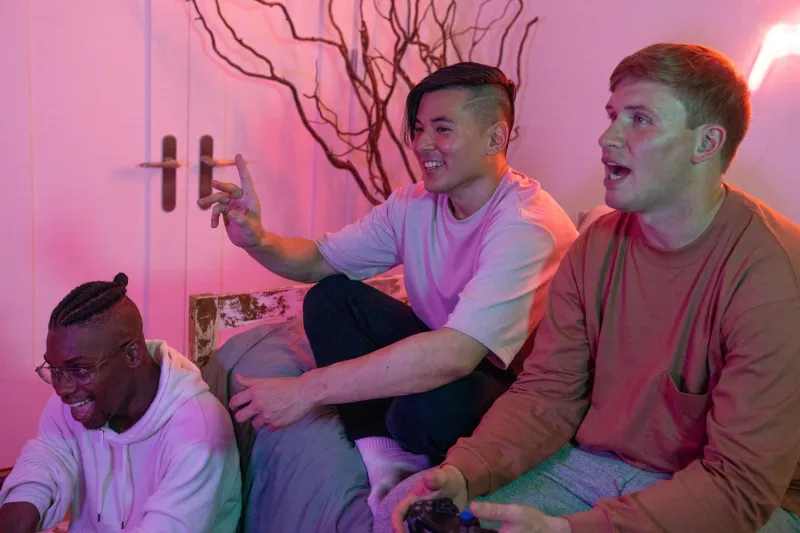
Competitive gaming has none of this at the youth level. What it has instead is a patchwork of grassroots programs, a handful of high school esports leagues of varying quality, and an informal network of streamers and content creators who occasionally mentor younger players — not because there's a system encouraging it, but because some of them are decent human beings.
The Grassroots Programs Filling the Void
To be fair, there are people trying. High school esports organizations like the High School Esports League (HSEL) and the National High School Esports Federation have made real efforts to create structured competition at the scholastic level. PlayVS, which partners with state athletic associations to run official high school esports programs, has expanded to thousands of schools across the country and represents genuine progress.
At the community level, organizations like Belong Gaming Arenas and a scattering of city-specific youth esports programs are attempting to provide structured environments where young players can compete and receive some level of coaching. A small number of former professional players have launched independent coaching businesses targeting teenage players with serious competitive aspirations.
But here's the problem: none of this is connected. There's no common standard for what good youth esports coaching looks like. There's no certification pathway for someone who wants to coach competitive gaming at a developmental level. There's no mechanism for a scout from a professional organization to systematically identify talented sixteen-year-olds the way a baseball scout can walk into a high school game and see a prospect. The ecosystem is fragmented by design — not intentionally, but because no single institution has taken responsibility for building the connective tissue.
The Coach Problem Is Actually the Biggest Problem
If you had to identify the single most critical missing piece in youth esports development, it's probably coaching — or more specifically, the absence of any serious infrastructure for producing qualified coaches.
In traditional sports, coaching is a career track. You can study it at university. You can get licensed. You can build a resume that gets you hired. There are mentors, there are professional associations, there are standards of practice. The knowledge of how to develop a young athlete — not just tactically, but physically, psychologically, and socially — is treated as a specialized skill set that requires training.
In esports, 'coach' most often means a former professional player who's aging out of competition and pivoting to mentorship, or a passionate volunteer at a high school program who may or may not have any background in pedagogy, sports psychology, or structured skill development. Neither of these is inherently bad. But neither constitutes a profession in any meaningful sense.
The teenagers who need coaching the most — the ones with real talent and no network, no connections to professional teams, no access to expensive private coaching services — are the least likely to find it.
What Would a Real Pipeline Actually Look Like?
Building a genuine youth development system for competitive gaming isn't a simple project, but it's not an impossible one either. The ingredients are mostly there — what's missing is coordination and institutional will.
A functional pipeline would probably need: standardized coaching education with a certification pathway, ideally developed in partnership with colleges that already have esports programs; a tiered competitive league structure that creates clear progression from local to regional to national levels; a scouting infrastructure that allows professional organizations to systematically identify and track young talent; and some mechanism for ensuring that the system is accessible to players regardless of geography or economic background.
That last piece is the hardest. One of the genuine promises of esports as a competitive discipline is that it theoretically removes some of the physical access barriers that keep talented kids out of traditional sports — you don't need a field, a pool, or an expensive piece of equipment to compete at a high level in most esports titles. But if the development infrastructure that emerges replicates the pay-to-play model of club sports, that promise disappears fast.
The Clock Is Running
Here's the uncomfortable reality: professional esports careers are short. The average age of a top-level competitive player in most titles peaks in the late teens to mid-twenties. That means the window for development is narrow, and every year without a coherent pipeline is a year that talented young players are navigating the path to professional play without the support structure they need.
Some of them will make it anyway — through raw talent, through luck, through finding the right Discord server or catching the eye of the right streamer. But many more won't. Not because they weren't good enough, but because nobody built the road.
American sports culture knows how to build roads. It's done it in basketball, baseball, soccer, swimming, and a dozen other disciplines. The question isn't whether it can be done for competitive gaming. It's whether anyone with the resources and the institutional authority to do it is going to decide it's worth doing.
Right now, the answer looks a lot like no. And the fifteen-year-old who's genuinely exceptional at Valorant keeps grinding ranked queues alone.
Until someone builds a real developmental pathway for young competitive gamers, American esports will keep leaving its best potential talent to figure it out on their own — and that's a loss for the whole industry.