
When the Voices Went Silent
In the summer of 2024, something unprecedented happened in gaming: the voices stopped. Not the sound effects, not the music, but the human voices that bring our favorite characters to life. When SAG-AFTRA called for a strike against major video game publishers over AI protections and residual payments, it marked the first time in gaming history that voice actors had enough collective power to bring AAA production to a grinding halt.
Two years later, as we survey the landscape of 2026, the aftershocks of that labor dispute have fundamentally reshaped how games get made, who gets hired, and what it means to be a voice actor in an industry increasingly dominated by artificial intelligence.
The Breaking Point
The strike didn't emerge from nowhere. For years, voice actors watched as their performances generated billions in revenue while they received flat session fees with no ongoing compensation. Meanwhile, the specter of AI voice synthesis loomed larger with each technological advancement. When publishers began experimenting with AI voices trained on actor performances without consent or compensation, the union decided enough was enough.
The 118-day strike targeted major publishers including Activision Blizzard, Electronic Arts, Epic Games, and Take-Two Interactive. Productions ground to a halt on some of the industry's biggest franchises: Call of Duty, Grand Theft Auto, Fortnite, and dozens of other titles saw their voice recording sessions suspended indefinitely.
The immediate impact was chaos. Game delays cascaded through release schedules. Some studios scrambled to find non-union talent, leading to jarring voice changes mid-franchise. Others doubled down on procedural dialogue systems and text-only storytelling. A few forward-thinking developers used the disruption as an opportunity to rethink their approach to narrative entirely.
The New Deal
When the strike finally ended in November 2024, the resulting agreement looked nothing like traditional Hollywood contracts. The breakthrough came through a novel approach: rather than fighting AI, the union chose to regulate it.
Under the new terms, voice actors retain ownership of their "vocal likeness" — essentially, a digital fingerprint of their voice that can't be used without explicit permission and ongoing compensation. Studios can use AI to generate additional dialogue, but only with the original actor's consent and a revenue-sharing agreement that kicks in when games exceed specific sales thresholds.
The deal also established something unprecedented in gaming: performance residuals. For the first time, voice actors receive ongoing payments based on a game's commercial success, similar to how film and television actors are compensated for reruns and streaming.
Winners and Losers
The new landscape has created distinct winners and losers. Established voice actors with recognizable voices — think Troy Baker, Ashley Johnson, or Laura Bailey — have seen their market value skyrocket. Studios are willing to pay premium rates for talent that can't be easily replicated by AI, leading to what industry insiders call "voice actor inflation."
 Photo: Laura Bailey, via static0.gamerantimages.com
 Photo: Ashley Johnson, via s2-glamour.glbimg.com
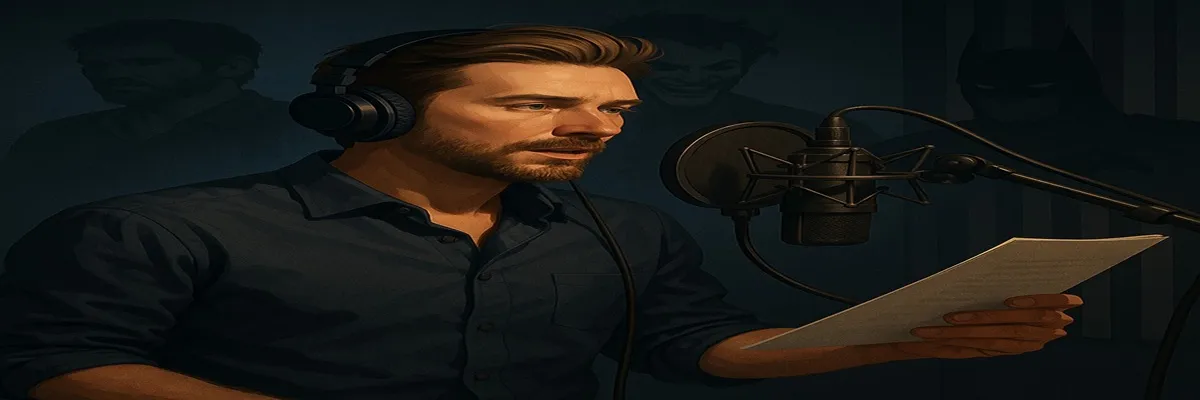 Photo: Troy Baker, via www.voiceyawards.com
Mid-tier actors have found themselves in a strange position. While they benefit from the new residual structure and AI protections, they're also competing with increasingly sophisticated synthetic voices for smaller roles. Many have pivoted to specializing in AI voice direction — essentially coaching artificial voices to deliver more natural performances.
The real casualties have been newcomers to the industry. Entry-level voice work, traditionally a pathway for new talent to build experience and relationships, has largely been automated away. Studios now use AI for background characters, crowd voices, and minor NPCs that once provided stepping stones for emerging actors.
The Technology Response
Publishers have responded to the new cost structure in predictable ways. Some, particularly in the mobile gaming space, have doubled down on AI voices, accepting the current limitations in exchange for cost savings and scheduling flexibility. Others have invested heavily in motion capture technology that can capture both physical and vocal performance simultaneously, maximizing the value of each recording session.
The most interesting development has been the rise of "hybrid casting" — productions that combine human actors for main characters with AI-generated voices for supporting roles, all under the oversight of union voice directors who ensure consistency and quality.
Several studios have also begun experimenting with "voice banks" — extensive recording sessions where actors provide raw vocal material that can be ethically processed into AI voices for future projects. These sessions can take weeks and command six-figure fees, but they provide actors with ongoing revenue streams from multiple projects.
International Implications
The strike's effects have rippled far beyond US productions. European studios, traditionally less reliant on celebrity voice talent, have found themselves with a competitive advantage in the American market. Games developed in Poland, France, and the UK can offer high-quality voice acting at lower costs, leading to a noticeable shift in where certain types of games get made.
Meanwhile, Japanese and Korean developers have largely continued their traditional approach of prioritizing their domestic voice casts, with English dubbing handled as a separate, often outsourced process. This has created interesting market dynamics where some games launch with AI-generated English voices while maintaining full human casts in their original languages.
The Creative Impact
Beyond economics, the strike has fundamentally changed how games approach narrative design. Knowing that voice recording is now significantly more expensive, developers have become more selective about which characters speak and when. This has led to a renaissance in environmental storytelling, text-based narrative, and creative uses of procedural dialogue systems.
Some of 2025's most acclaimed indie games deliberately embraced these constraints, creating innovative narrative experiences that relied on minimal voice acting while maximizing emotional impact. Games like "Echoes of Silence" and "The Last Letter" proved that powerful storytelling doesn't require expensive voice casts.
Looking Forward
As we move through 2026, the industry is still adapting to its new reality. The next major test will come as the first wave of games developed entirely under the new agreement reaches market. Early indicators suggest that while production costs have increased, the improved working conditions and revenue-sharing arrangements have led to better performances and stronger actor investment in their characters' success.
The union is already preparing for the next round of negotiations, with discussions focusing on motion capture protections and international revenue sharing. Meanwhile, technological developments in real-time voice synthesis and neural audio processing continue to push the boundaries of what's possible with AI voices.
The Human Element
Perhaps the most significant change has been philosophical. The strike forced the industry to confront a fundamental question: in an age of artificial intelligence, what value do we place on human creativity and performance?
The answer, as reflected in consumer behavior, has been surprisingly clear. Games that prominently feature human voice actors in their marketing have consistently outperformed those that rely heavily on AI. Players, it seems, can sense the difference — and they're willing to pay for the human touch.
This preference has created a new category of "performance-driven" games that treat voice acting as a core feature rather than an afterthought. Studios are investing in longer recording sessions, more collaborative development processes, and deeper integration between voice actors and character design teams.
The Bottom Line
The voice actors' strike of 2024 didn't just change contracts — it changed the fundamental relationship between human creativity and technological capability in game development. While AI voices have become more prevalent and sophisticated, they've also highlighted the irreplaceable value of human performance and emotion.
For players, this means better voice acting in major releases, but potentially higher game prices. For developers, it means more strategic decisions about when and how to use human talent. For voice actors, it means a smaller but more sustainable industry where established talent can build lasting careers while newcomers face higher barriers to entry.
The voices have returned, but they're speaking a new language — one that recognizes both the power of technology and the irreplaceable value of human creativity.