The Second Screen Revolution: How Smartphones Are Becoming the Most Underrated Gaming Peripheral You Already Own
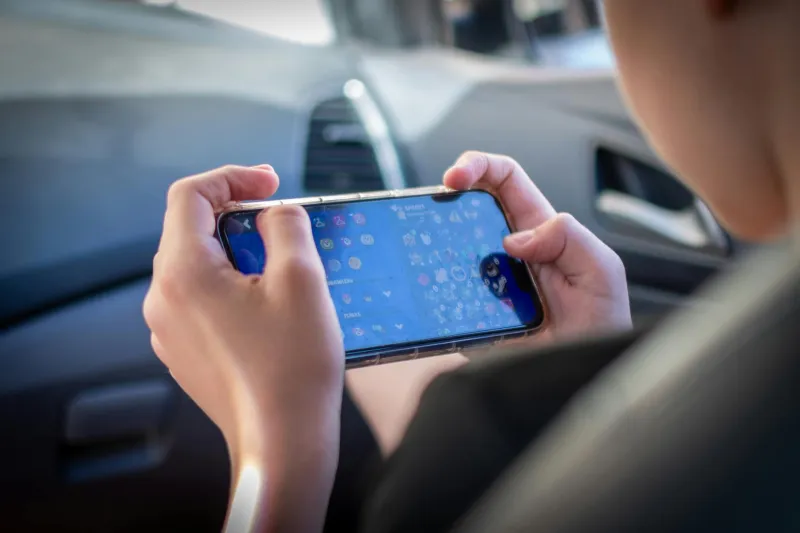
Last week, I found myself sitting in my living room, PlayStation 5 controller in one hand, iPhone in the other, completely absorbed in managing my settlement in Fallout: Commonwealth Rebuilt. While my character explored the wasteland on the big screen, my phone displayed a real-time map with resource locations, faction standings, and a complete crafting database. For the first time in years, the "second screen experience" didn't feel like a gimmick—it felt essential.
This isn't the second screen gaming of the early 2010s, when publishers desperately tried to make us care about companion apps that barely functioned and added nothing meaningful to the experience. Something fundamental has shifted in 2026, and smartphones are quietly becoming the most versatile gaming peripheral that almost nobody talks about.
The Ghost of Second Screens Past
Let's acknowledge the elephant in the room: second screen gaming has a terrible track record. Remember Ubisoft's companion apps for Assassin's Creed and Watch Dogs? Or Microsoft's ambitious SmartGlass initiative that promised to revolutionize Xbox gaming? These early attempts failed because they felt tacked-on, requiring players to constantly look away from their main game to interact with largely pointless features.
"The problem was that most developers treated the second screen like a dumping ground for features that didn't fit anywhere else," explains former Nintendo designer Kenji Nakamura, now working as an independent consultant. "They were asking players to split their attention between two screens without giving them a compelling reason to do so."
 Photo: Kenji Nakamura, via www.anime-planet.com
Those failures poisoned the well for nearly a decade, making both developers and players skeptical of any game that suggested using a phone alongside a console or PC.
The New Wave: Integration, Not Distraction
What's different in 2026 is that successful second screen implementations have learned to complement rather than compete with the main gaming experience. Instead of forcing players to constantly switch focus, the best examples provide persistent, contextual information that enhances immersion rather than breaking it.
Take Cyberpunk 2088, CD Projekt Red's follow-up to their controversial 2020 release. The game's "Neural Link" companion app transforms your smartphone into an in-universe device, displaying text messages from NPCs, mission briefings, and a functional city map—all presented as if they're coming through your character's cybernetic implants. The integration feels so natural that checking your phone becomes part of the roleplay experience.
"We wanted the companion app to feel like a piece of technology that actually exists in Night City," explains lead designer Anna Kowalski. "When players get a text from a fixer about a new job, it appears on their phone exactly like a real text message. The boundary between the game world and reality starts to blur."
The Inventory Revolution
Perhaps the most successful second screen implementation comes from an unexpected source: tabletop gaming adaptations. Gloomhaven Digital and Wingspan Mobile have perfected the art of using smartphones as persistent game state managers, handling complex bookkeeping while keeping the main screen focused on gameplay and visual spectacle.
This approach has started migrating to traditional video games with remarkable results. The Elder Scrolls VI beta includes an optional companion app that turns inventory management—historically one of Bethesda's most criticized systems—into a surprisingly enjoyable experience. Players can sort, craft, and organize their gear during loading screens, commutes, or even while away from their console entirely.
"The companion app has completely changed how I play Bethesda games," says longtime fan Jessica Park from Seattle. "I used to spend 30% of my game time in menus. Now I can handle all that administrative stuff while watching TV or during my lunch break, and focus my actual game time on exploration and combat."
The Asymmetric Multiplayer Breakthrough
Where second screen gaming truly shines is in asymmetric multiplayer experiences. Keep Talking and Nobody Explodes pioneered this concept years ago, but 2026 has seen an explosion of games that give smartphone users completely different roles than their console or PC counterparts.
Phasmophobia: Overseer allows one player to act as mission control using only their smartphone, monitoring security cameras, analyzing evidence, and guiding their teammates through haunted locations. The phone player has access to information that the main players don't, creating genuine teamwork dynamics that feel natural rather than forced.
Similarly, It Takes Two: Extended includes optional smartphone integration that allows a third player to assist with puzzle-solving and environmental manipulation, turning a co-op experience into a collaborative three-person adventure.
The Dark Side: Monetization Concerns
Not every second screen implementation is motivated by pure design innovation. Some developers are clearly using companion apps as additional monetization surfaces, creating artificial friction in the main game that can only be resolved through smartphone purchases.
Destiny 3's companion app, for instance, locks certain inventory management features behind a premium subscription, essentially charging players for convenience that should be built into the base game. Similarly, several mobile companion apps have introduced "energy" systems that limit how often players can interact with their console games without making additional purchases.
"There's a fine line between enhancing the experience and holding features hostage," warns consumer advocacy group Fair Play Alliance. "When companion apps become necessary rather than optional, we start entering exploitative territory."
Technical Challenges and Solutions
The biggest obstacle to widespread second screen adoption remains technical rather than conceptual. Maintaining real-time synchronization between multiple devices, handling network latency, and ensuring cross-platform compatibility creates significant development overhead.
However, cloud gaming infrastructure improvements have made these challenges more manageable. Services like Xbox Cloud Gaming and PlayStation Now now offer APIs that allow companion apps to connect directly to game sessions, reducing latency and improving reliability.
"The technical foundation is finally solid enough to support the experiences we've wanted to create for years," explains cloud gaming architect David Chen. "We're not fighting against the technology anymore—we're building with it."
The Future of Multi-Device Gaming
Looking ahead, the most interesting developments are happening at the intersection of second screen gaming and emerging technologies. Augmented reality features are beginning to appear in companion apps, allowing players to view game information overlaid on their real environment. Voice integration is making second screen interactions more seamless and less visually demanding.
Pokémon Legends: Arceus 2 includes AR features that let players use their smartphone cameras to "capture" Pokémon that appear in their actual surroundings, with catches transferring to their Switch game. It's gimmicky, but it points toward a future where the boundaries between different gaming platforms become increasingly fluid.
The Verdict: Revolution or Evolution?
After spending months with various second screen implementations, I'm convinced we're witnessing the beginning of a genuine paradigm shift. The smartphone isn't replacing traditional gaming controls—it's augmenting them in ways that feel natural and beneficial.
The key difference between 2026's second screen gaming and previous attempts is respect for player attention. The best implementations understand that smartphones should enhance focus rather than fragment it, providing persistent value without demanding constant interaction.
We're still in the early stages of figuring out what multi-device gaming can become, but the foundation is finally solid. Your smartphone might not feel like a gaming peripheral yet, but give it another year—you might be surprised how essential that second screen becomes to your favorite games.
The revolution isn't coming through dedicated hardware or expensive accessories. It's happening through the device that's already in your pocket, waiting to transform how you play.