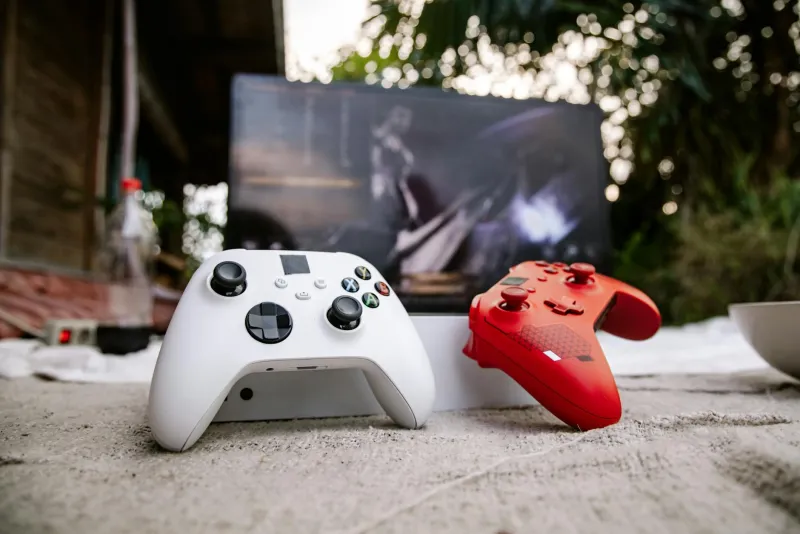
You've been there. Three wins in a row in your favorite shooter, feeling like you've finally "got good," only to be immediately thrown into a lobby where you can't take two steps without getting demolished by players who seem to exist on an entirely different skill plane. Your kill/death ratio plummets, your mood sours, and you find yourself muttering the same question millions of gamers ask daily: "Is this game trying to make me lose?"
The uncomfortable truth is that it might be. Welcome to the world of engagement-optimized matchmaking, where the algorithm isn't just measuring your skill—it's manipulating your emotions, calculating your frustration tolerance, and carefully calibrating your wins and losses to keep you clicking "Play Again." In 2026, the line between fair competition and psychological manipulation has never been blurrier.
The SBMM Promise vs. Reality
Skill-based matchmaking (SBMM) was supposed to solve gaming's biggest problem: the skill gap. No more new players getting crushed by veterans, no more pros accidentally wandering into casual lobbies and ruining everyone's day. The promise was simple—players of similar skill levels would face each other, creating fair, competitive matches where everyone had a roughly 50% chance of winning.
That was the theory. The reality, as any Call of Duty or Apex Legends player will tell you, feels more like being trapped in an emotional roller coaster designed by a casino. Modern SBMM systems don't just track your skill—they monitor your engagement patterns, your spending habits, your likelihood to quit, and your emotional state. They're not trying to create fair matches; they're trying to create addictive ones.
"Traditional SBMM died around 2019," explains Dr. Jennifer Walsh, a data scientist who worked on matchmaking systems for several major publishers before becoming an industry critic. "What we have now are engagement retention algorithms that happen to use skill as one of many variables. The goal isn't competitive integrity—it's maximizing time played and money spent."
 Photo: Dr. Jennifer Walsh, via www.efw.ca
Inside the Algorithm's Mind
To understand how modern matchmaking really works, you need to think like a behavioral psychologist rather than a game designer. These systems don't just know your kill/death ratio—they know when you last made an in-game purchase, how long it's been since your last win, whether you're playing with friends, what time of day you typically rage-quit, and dozens of other psychological markers.
The most sophisticated systems, like those used in Fortnite and Warzone, employ what industry insiders call "dynamic difficulty adjustment" disguised as skill matching. If the algorithm detects you're getting frustrated (measured through factors like decreased accuracy, increased deaths, or shorter play sessions), it might subtly place you in an easier lobby for your next match. Conversely, if you're on a winning streak and showing signs of overconfidence, expect to face significantly tougher opposition.
"It's not about your skill level anymore," says Marcus Rodriguez, a former Activision data analyst who spoke on condition of anonymity. "It's about your 'engagement trajectory.' Are you likely to play for another hour? Are you close to making a purchase? Are you at risk of uninstalling? The matchmaking system is essentially a giant behavioral modification machine."
The Dopamine Factory
The psychological manipulation goes deeper than most players realize. Modern matchmaking systems are built around what researchers call "variable ratio reinforcement schedules"—the same psychological principle that makes slot machines addictive. By carefully controlling when you win and lose, these algorithms create powerful dopamine responses that keep you coming back.
A typical session might follow a predictable pattern: a few easy wins to build confidence and trigger dopamine release, followed by increasingly difficult matches that create tension and challenge. Just when frustration peaks, the system throws you another easy win to prevent you from quitting. It's not random—it's calculated.
Streamer and former professional player TimTheTatman has been vocal about this phenomenon: "I can literally predict when the game is going to give me bot lobbies versus when it's going to put me against pros. It's not based on my performance—it's based on keeping me engaged. Some days I feel like I'm not playing against other players; I'm playing against an algorithm."
 Photo: TimTheTatman, via i.ytimg.com
The Casual vs. Competitive Divide
This algorithmic approach has created an unprecedented rift in the gaming community. Competitive players want pure skill-based matching—let the best player win, regardless of engagement metrics. Casual players often prefer the current system's emotional manipulation, even if they don't realize that's what they're experiencing.
"I just want to have fun after work," explains casual gamer Sarah Martinez. "I don't care if the matchmaking is 'pure' or whatever. If the game gives me some easy wins to help me unwind, that's fine by me."
But competitive players see this as a fundamental betrayal of gaming's meritocratic principles. "It's not a competition anymore," argues professional Valorant player Michael "Shroud" Grzesiek. "It's a carefully orchestrated performance where the algorithm decides who gets to be the hero and who gets to be the villain. That's not competitive integrity—that's entertainment."
The Spending Connection
Perhaps the most troubling aspect of modern matchmaking is its connection to monetization. Internal documents from several major publishers, leaked during various legal proceedings, reveal that matchmaking systems actively consider players' spending patterns when creating matches.
Players who recently made purchases might find themselves in slightly easier lobbies, creating positive associations between spending money and having fun. Meanwhile, players who haven't spent money in a while might face tougher opposition, subtly encouraging them to buy advantages like better weapons, characters, or cosmetics.
"It's pay-to-win, but with extra steps," explains consumer advocacy lawyer David Kim. "Instead of selling you a gun that does more damage, they sell you a gun and then put you in lobbies where you're more likely to succeed with it. The outcome is the same, but it's much harder to prove or regulate."
What Fair Matchmaking Could Look Like
So what would genuinely fair matchmaking look like in 2026? Several smaller developers and indie studios are experimenting with transparent alternatives that prioritize competitive integrity over engagement metrics.
Riot Games' Valorant, despite its flaws, has been praised for its relatively straightforward approach to skill measurement. The system focuses primarily on actual gameplay performance rather than engagement patterns, creating matches that feel more consistently fair even if they're less emotionally manipulative.
Some developers are also experimenting with player choice. Splitgate 2, launching later this year, will allow players to choose between "engagement-optimized" and "skill-pure" matchmaking queues, giving players agency over their experience.
"The technology exists to create truly fair matchmaking," argues independent game developer Anna Kipnis. "The question is whether publishers are willing to sacrifice short-term engagement for long-term trust. Most aren't."
The Algorithm's Endgame
As we move deeper into 2026, matchmaking algorithms are becoming even more sophisticated. Machine learning systems can now predict player behavior with frightening accuracy, adjusting not just match difficulty but also game pacing, weapon spawns, and even teammate personalities to optimize for specific emotional outcomes.
The next frontier is biometric integration. Several major publishers are reportedly testing systems that use heart rate monitors, facial recognition, and other physiological data to create even more precise emotional manipulation. Imagine a matchmaking system that knows exactly when you're stressed, excited, or on the verge of quitting—and adjusts your experience in real-time accordingly.
Taking Back Control
For players who want to escape the algorithm's grip, options are limited but not non-existent. Custom servers, when available, often provide more traditional skill-based matching. Community-run tournaments and leagues bypass algorithmic manipulation entirely. Some players have even resorted to deliberately manipulating their own stats to "trick" the system into providing fairer matches.
But the real solution might require industry-wide change. As players become more aware of how these systems work, there's growing pressure for transparency and choice. The European Union is already considering regulations that would require publishers to disclose their matchmaking methodologies, and several U.S. states are exploring similar legislation.
The Spawn Point of Truth
The question isn't whether modern matchmaking systems are manipulative—they objectively are. The question is whether that manipulation is acceptable in exchange for the emotional highs and engagement it provides. For an industry built on the promise of fair competition and player agency, the current trajectory represents a fundamental shift away from those values.
Ultimately, every player needs to decide for themselves: Do you want to play games, or do you want games to play you? Because in 2026, that choice is becoming increasingly stark, and the algorithm is watching your decision very, very carefully.